Blog
Twin Health x Peloton: How Movement, Data, and Community Power Better Metabolic Health
Oops! This content is hosted in another place.
Find it HereIf you’ve ever been told “your metabolism slows down as you get older,” you’ve probably wondered what that actually means — and more importantly, what you can do about it.
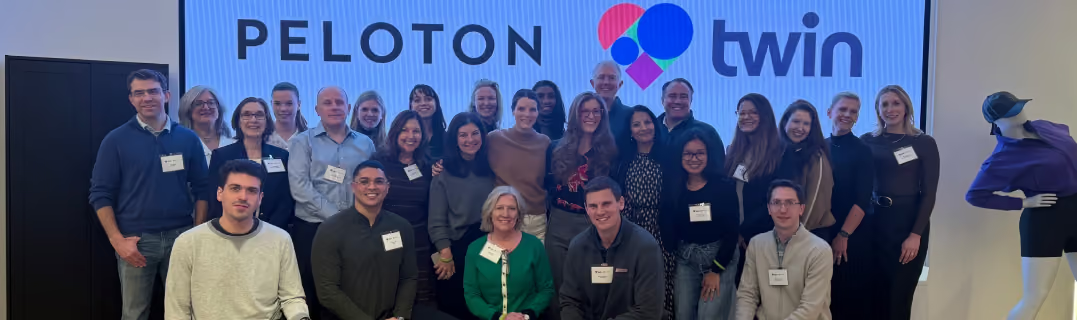
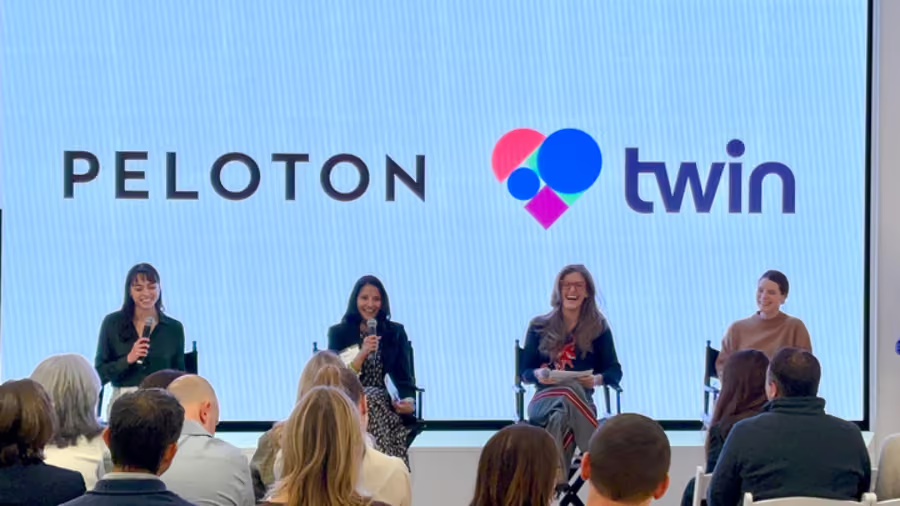
At our recent Twin Health x Peloton in-person event in NYC on January 20, Twin Health’s EVP and Chief Medical Officer, Dr. Lisa Shah, joined Peloton instructor Rebecca Kennedy, who recently launched her first cross training program HiLit, and Peloton’s Senior Director of Business Partnerships Courtney Nolan for a candid conversation about the real-world connection between movement and metabolic health — and why this partnership is designed to help people build sustainable habits over quick fixes.
From AI-powered personalization to the power of five-minute workouts, GLP-1 medication realities to community accountability, the panel kept coming back to this simple truth: when movement becomes accessible, it becomes consistent — and that’s when health changes become a reality.
A shift toward metabolic health
Dr. Shah explained that Twin’s programs are built around changing what’s happening inside the body — blood sugar stability, insulin resistance, energy, sleep, stress, and how the body fuels itself. The goal isn’t just weight loss, it’s health outcomes people can feel and lab results that measure success.
This mindset aligns strongly with Peloton’s mission to help Members empower people to live fit, strong, long, and happy lives. Dr. Shah noted that both Twin and Peloton emphasize getting stronger, feeling better, improving energy, and building confidence. Rebecca reinforced this from the movement side. People may start with one goal (often weight loss), but what keeps them going is the cascade of benefits they feel in real time — better sleep, better mood, more consistent energy, more confidence, more stability, and a sense of control over their long-term health.
What is an AI Digital Twin?
Digital twins have been used for years in complex systems like jet engines and self-driving cars, where you need to understand cause and effect in order to improve performance and safety. The idea is to create a dynamic “replica” of something that can predict outcomes based on data.
Twin applies the same concept to the most complex system we manage every day: the human metabolism.
Metabolism isn’t just how fast you burn calories. It’s influenced by thousands of internal markers and external inputs — what you eat, how you sleep, stress, movement, genetics, and more. Twin’s AI Digital Twin is designed to map how those inputs affect a person’s health outcomes and then generate personalized guidance that adapts over time.
In other words, Twin isn’t trying to force everyone into the same plan. It’s working to understand your metabolic patterns and help you build habits that fit your life.
Movement + Metabolism: The small changes that matter most
Movement isn’t just a “nice to have.” It’s a metabolic necessity.
Dr. Shah described metabolism in relatable terms: kids run around all day and seem to burn energy constantly. As adults, routines often become more sedentary and our bodies handle energy differently. When we don’t move, fuel (like glucose from carbohydrates) has limited places to go. It can be burned as energy or stored as fat.
She mentioned that even a 10-minute walk after a meal can change how your body responds, especially after higher-carb or higher-calorie foods. The goal isn’t perfection. It’s about simple, repeatable actions that influence blood sugar and energy.
Rebecca echoed this with a bigger-picture lens. Movement improves far more than appearance. Strength training supports long-term resilience, which means strong bones, healthier joints, better balance, and reduced risk of injury as we age. As she said during the panel, “Getting older is a privilege. Getting stronger is a choice.”
That’s the mindset shift both brands are leaning into: movement as a tool for longevity, not punishment.
How the Twin Health x Peloton partnership came together
Courtney Nolan explained Peloton’s approach to partnerships through the lens of Member outcomes.
In her role leading Integrated Wellness partnerships, Courtney said Peloton looks for partners that do two things:
- Meet members everywhere: At home, at work, and across different stages of life and fitness.
- Improve outcomes: Partners who care about sustained results, not short-term milestones.
This approach helps members feel motivated and capable, build habits that last, and focus on real outcomes rather than quick wins.
From Twin’s side, Dr. Shah emphasized a shared philosophy: both companies focus on feeling better, getting stronger, and building confidence — without anchoring everything to calorie math or extreme dieting.
Accessibility Wins: Why 5 minutes is a big deal
A major barrier to movement is the belief that exercise must be expensive, time-consuming, or “hardcore” to matter.
This is where the partnership becomes practical.
Peloton’s platform includes classes as short as 5 minutes long, including stretching, core workouts, meditation, warm-ups, cool-downs, low-impact walks, and more. Courtney described how reducing the barrier to entry is often what helps people start (and keep going). People don’t need to be “fit enough” to begin. They just need a starting point that doesn’t feel overwhelming.
Rebecca took it further, highlighting something Peloton is known for: community accountability. People find sub-communities — parents, nurses, beginners, strength-focused crews — and those groups become their “show up” network.
The takeaway wasn’t that everyone needs to do the same workouts. The takeaway was that consistency is built through accessibility. And accessibility often starts with deciding what you’ll actually do.
As Courtney put it: “The best workout is the one that you’ll do.”
How Twin Members use Peloton content (and why personalization matters)
Dr. Shah later walked the audience through how Twin members translate data into action and where Peloton fits in.
Twin members generate thousands of data points per day through tools like wearables and (for many members) continuous glucose monitors (CGMs). With that data, Twin can see how:
- Sleep impacts blood sugar trends
- Stress influences those patterns
- Movement changes glucose response
- Meal choices affect energy and glucose stability
Dr. Shah shared a personal example: when she sleeps below a certain threshold, her blood sugar runs about 20 points higher the next day — demonstrating how interconnected these systems are.
Historically, Twin could encourage movement and track it. But what members needed was a scalable, realistic way to actually do the workouts (especially when barriers like weather, work schedules, safety, cost, and access to equipment exist).
The Peloton partnership adds a broad library of workouts to Twin’s app that can meet people where they are: whether it’s at home, on a phone, in small spaces, on unpredictable schedules.
Coming next, Dr. Shah shared, is the ability to match workout types to individuals — similar to how nutrition responses differ from person to person. Over time, Twin aims to become more precise in recommending routines that are both doable and impactful, helping Twin Health members build a sustainable habit loop rather than an all-or-nothing cycle.
Starting small, on purpose
One detail that stood out: Twin doesn’t launch members into an intense plan. To begin, members are encouraged to complete 4 workouts per month — and those workouts can be short. It’s not about crushing a challenge; it’s about building the habit foundation and ramping up gradually with the right coaching support.
That’s behavior change science in practice: make it achievable first, then build.
Community + Consistency: The 2 invisible drivers of change
Rebecca and Courtney both returned repeatedly to the non-obvious drivers of long-term success:
- Consistency isn’t willpower — it’s environment + ease.
- Community isn’t a nice bonus — it’s accountability and belonging.
Rebecca described how Peloton’s community creates momentum that’s hard to replicate alone: people meet online, learn each other’s stories, and even travel to take classes together. That sense of belonging lowers intimidation and increases follow-through, especially for people who feel overwhelmed walking into a gym or starting a new program.
A Necessary Conversation: GLP-1s, muscle loss, and long-term health
The panel also addressed one of the most talked-about topics in metabolic care today: GLP-1 medications.
Dr. Shah framed Twin’s perspective clearly: GLP-1s can be valuable, but they’re not for everyone and not forever.
She shared a key adherence reality: many people discontinue GLP-1 therapy over time. And when weight loss happens rapidly, it often includes not only fat loss but also muscle and bone loss. That matters because muscle tissue plays an outsized role in metabolic health.
Dr. Shah explained the challenge that can follow discontinuation: rebound weight gain tends to happen, but it’s more likely to be fat, not rebuilt muscle and bone — potentially impacting someone’s metabolic health.
That’s why Twin’s approach centers on building the system that sustains health changes:
- Emphasizing nutrition quality (including adequate protein and micronutrients)
- Rebuilding strength through movement
- Using coaching to support consistency through transitions
Bottom line: the partnership’s focus on strength training and sustainable movement isn’t a trend — it’s a metabolic strategy for Twin Health members.
What does a well-rounded movement routine look like?
When the conversation turned to what people should actually do, Dr. Shah made a key distinction:
- Movement every day (like walking and general activity) is foundational.
- Exercise routines (like structured workouts) build fitness adaptations.
In her view, daily movement matters because the body needs regular energy use. Structured exercise adds a different layer that supports cardiovascular capacity, heart rate recovery, and strength.
She described a general north star many people can aim toward over time: multiple sessions per week that elevate heart rate beyond baseline walking, with strength work included. But she also stressed the need to avoid overly rigid workout prescriptions — especially in a virtual setting where form and physical limitations vary widely.
The practical message stayed consistent with everything else said that day: start achievable, stay consistent, and build gradually.
Wearables, integrations, and “How many devices do I need?”
The audience asked a question many people can relate to: with so many wearables — Apple Watch, Garmin, Oura, heart rate monitors — how does it all connect without becoming overwhelming?
Dr. Shah noted Twin’s integrations with major wearables (including Apple Watch and Fitbit), with additional integrations planned. Courtney added that Peloton connects with several ecosystem partners as well (and offers its own heart rate monitor option), with the broader goal of making the experience accessible across devices.
Rebecca offered a useful reminder: data can be helpful, but too many metrics can also create noise. The best outcome isn’t perfect tracking — it’s building awareness of how your body feels, using data as a guide rather than a source of stress.
Key Takeaways: What the partnership is really about
If you only remember a few things from the panel, make them these:
- Metabolic health is more than weight management. It includes blood sugar stability, energy, sleep, strength, and long-term risk reduction.
- Small movement changes matter. Even brief post-meal movement can shift metabolic response.
- Strength is metabolic leverage. Muscle supports better metabolic function and long-term resilience.
- Accessibility drives consistency. 5-minute classes and “start where you are” programming help habits stick.
- Community keeps people showing up. Belonging and accountability are powerful behavior-change tools.
- GLP-1 journeys need strength support. Rapid weight loss can include muscle and bone loss — strength training helps protect long-term health.
- Personalization is the future. Data-informed coaching, paired with accessible movement options, makes long-term behavior change more realistic.
Ready to keep going?
Twin Health and Peloton share a belief that health is built through repeatable actions, not extreme plans — and that people deserve tools that meet them where they are.
Whether your starting point is a five-minute stretch, a post-meal walk, a beginner strength class, or a structured program, the goal is the same: build the habit, keep it sustainable, and let the health outcomes follow.
To learn more about how Twin can support your employees, click here to speak with a team member.
No content exists for this entry