Blog
How Twin Health’s Food Color System Helps You Eat Smarter
Oops! This content is hosted in another place.
Find it HereHave you ever tried to follow “healthy eating” rules before? Eat this. Avoid that. Track everything. But no matter how hard you try to make healthier choices, do the results just not add up?
It’s not your fault. The truth is, food doesn’t affect everybody the same way. What helps one person feel energized and balanced may leave someone else feeling tired, mentally fatigued, or or even more hungry.
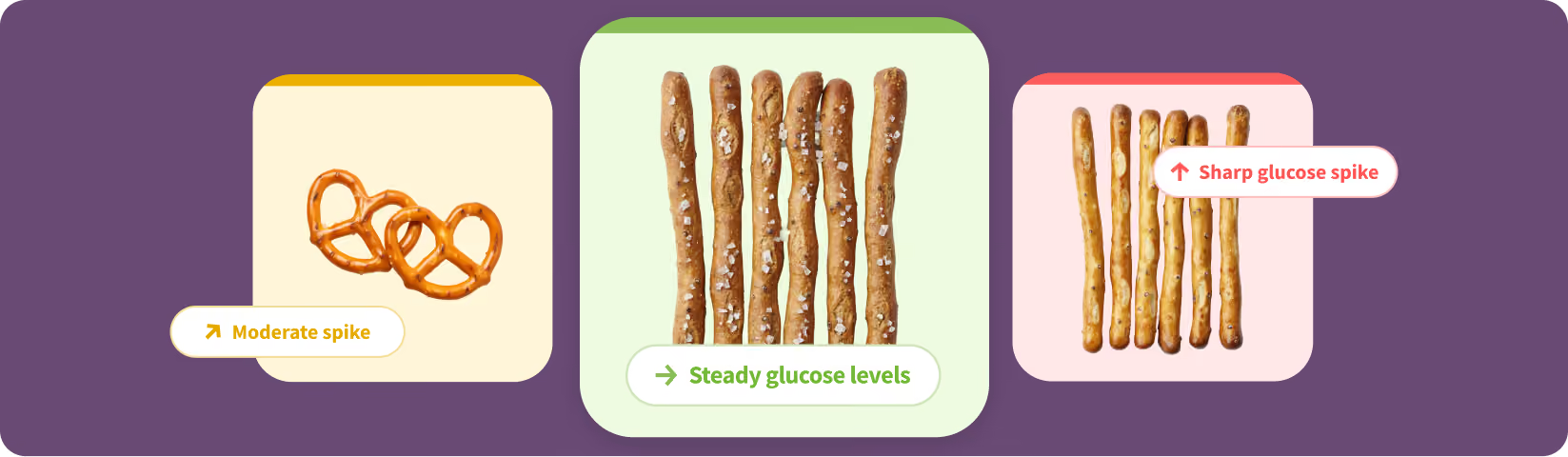
Twin’s color system helps you understand how different foods affect your unique body. In the Twin app, foods and meals are labeled green, orange, or red based on how they affect your metabolism, so you can make smarter choices without second-guessing yourself and achieve lasting results.
Here’s how it works:
The Three Colors
Twin’s system sorts foods and meals into three categories:
- Green for you: Great choices. Foods that support steady blood sugar and align with your health goals.
- Orange for you: In moderation. Foods that can cause higher blood sugar responses and are less supportive of your health goals.
- Red for you: Avoid these. These foods are more likely to spike your blood sugar or work against your current health goals.
The key phrase is “for you.”
A food that’s green for one person might be red for another. That’s the whole point.
Why Blood Sugar Matters
After you eat, your blood sugar rises to give your body energy. That’s normal. But if it climbs too high or stays elevated for too long, it harms your metabolism over time. This is called a blood sugar spike. Keeping that spike curve lower and steadier over time will help improve your metabolism health.
Twin predicts how high your spikes will be and how long they’ll last for each meal. Combined with what it knows about your unique metabolism, that prediction becomes your meal color.
What Goes Into Your Color
Twin doesn’t just look at the food. The color is shaped by:
- The nutrients in the food
- Your average blood sugar over the last few days
- Twin’s suggested serving size for you
- Your weight, sleep, stress, and activity
- Other foods you’ve eaten recently
This is why two people eating the exact same meal can see two different colors. And it’s why members’ colors shift over time.
Predictions for Foods You Haven’t Eaten Yet
You don’t have to eat every food for Twin to color it. If watermelon spiked your blood sugar and turned red, Twin will predict cantaloupe is also red, since it has the same sugar content and similar nutrients. The system learns from what you’ve eaten and applies that to foods with similar profiles.
Turning Orange and Red Meals Green
Here’s where the system gets really useful: you don’t have to scrap an orange or red meal. You can change it.
When you log a meal that isn’t green, Twin suggests meal actions to improve it:
- Swap out red foods for greener alternatives
- Reduce portions of higher-impact items
- Take ACV (apple cider vinegar) before the meal to help reduce the spike
- Change the order you eat foods. Fiber and protein first, carbs last.
- Get active after the meal to help your body use the glucose
As you apply these actions, watch the circle around your meal icon close. That means the meal is improving. With enough improvement, the color shifts from red or orange to green.
It’s a small but powerful insight: the same meal can land very differently depending on the order you eat it, timing, and activity.
Colors Change as You Change
Meal colors aren’t fixed long-term either. As your metabolism improves, foods that were once orange or red can turn green on their own. Your body becomes able to handle a wider range of foods without the same blood sugar response.
You can speed this up by:
- Increasing your activity
- Improving your sleep
- Reducing stress
- Consistently using Twin Tools with your meals
As your metabolism improves, your body is able to handle a wider range of foods. It compounds.
The Bottom Line
Think of meal color as a personalized guide to how a meal may affect your body today, not a universal definition of “healthy” or “unhealthy.” Your metabolism changes over time, and your meal colors can change with it.
Instead of relying on generic nutrition advice, Twin helps you understand what works best for your body and gives you practical ways to improve any meal.
Not a Twin member yet?
No content exists for this entry