Twin for employers

The care platform that gets paid on your employees’ outcomes

Twin’s Digital Twin Care Platform continuously individualizes care across your workforce to improve health and lower costs. We build a living AI Digital Twin of each person’s biology and behavior, so care changes as they do.

Talk to sales

Employer leader smiling in a meeting room
71%
Type 2 Diabetes Reversal [1]
86%
Still Engaged Daily After 1 Year [1]
-27 lbs
Average Weight Loss [1]
$9,047
In Year 1 Type 2 Diabetes Savings Per Member
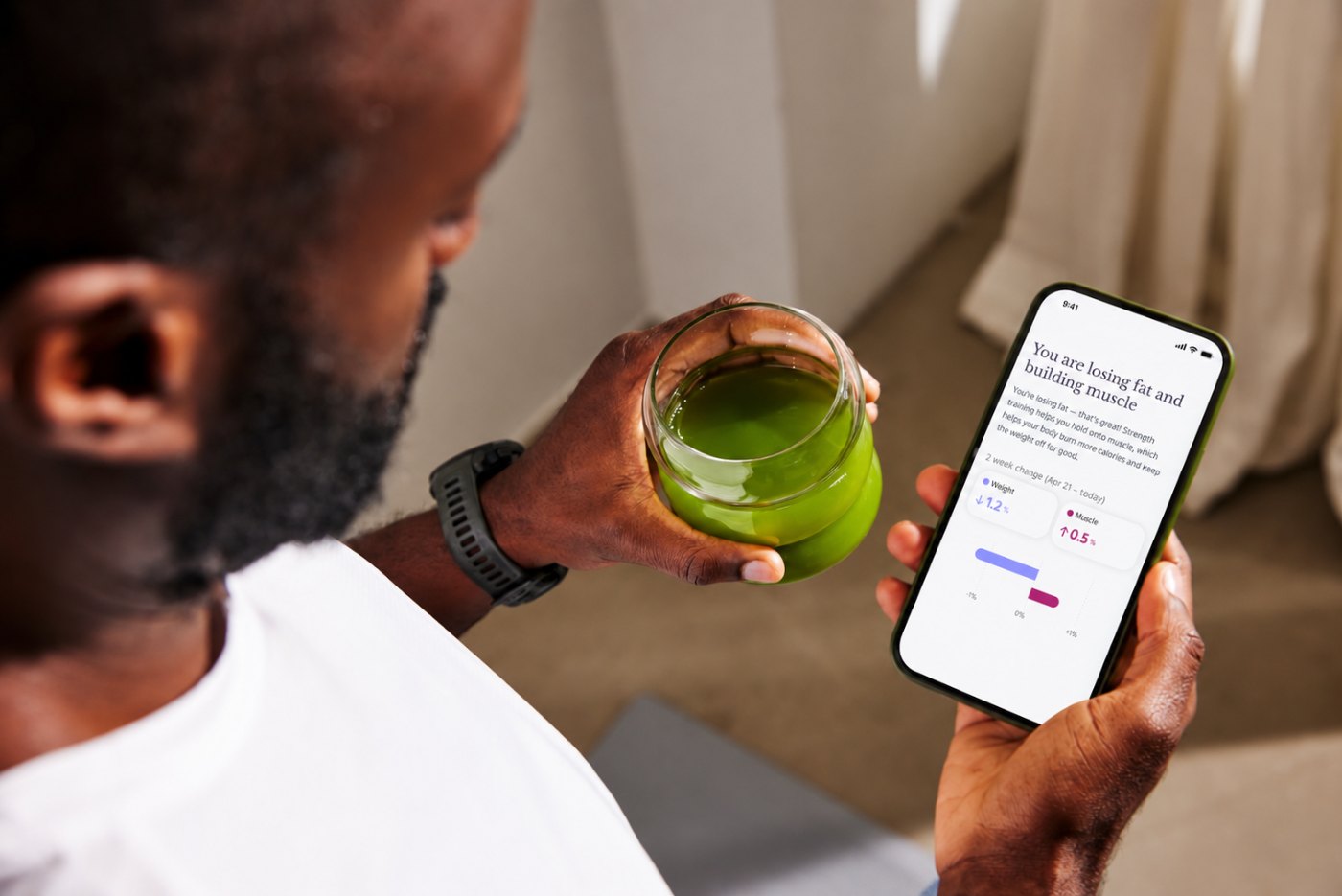
Twin member checking the Twin app while holding a green smoothie

Twin delivers precision cardiometabolic care across your workforce.

Designed to make metabolic care useful in real life: on a night shift, on the road, between meetings, or at home after a long day.

✓
Low-friction
Meals can be logged by photo, voice, barcode, or text. Connected devices reduce manual tracking.
✓
Useful Immediately
Members learn something about their own body, rather than receiving another generic wellness lesson.
✓
Human when it matters
A clinical care team is there for medication decisions, symptoms, coaching, and questions.
✓
Still used a year later
86% daily engagement at 12 months in the Cleveland Clinic randomized controlled trial.

One AI model. Built around each member. Improving metabolic health across conditions.

01
See

A clearer picture of health

Twin continuously captures signals across food, movement, sleep, medications, labs, and smart devices.
02
Guide

In-the-moment guidance

The AI Digital Twin connects those signals into one evolving model to identify patterns and give personalized guidance.
03
Act

Know your unique next steps

Twin’s Care Team uses those real-time insights for unique next steps that help achieve health goals.

Most cardiometabolic health solutions manage disease while guessing how each members’ body functions.

Most Care Models

✕
Population averages determine the starting pathway
✕
Personalization is layered onto protocols
✕
Scheduled touchpoints determine when care changes
✕
Revenue can continue with enrollment or utilization
✕
Improvement may be shown against starting point

Twin Health

✓
A living model continuously learns each person’s metabolism
✓
Care continuously personalizes as the member responds
✓
In-the-moment signals help inform when care should change
✓
Twin’s core pricing premise ties payment to measurable outcomes
✓
Twin has randomized clinical evidence against usual care and matched-control claims evidence

The evidence comes before the economics.

Before you accept an outcomes slide, ask: Compared with what? Twin’s strongest clinical evidence was measured against usual care, and its financial evidence was measured in real-world claims against matched controls.

Clinical outcomes
Financial outcomes
71%
T2D reversal
vs. 2.4% usual care
27lbs
average weight loss
vs. 12 lb usual care
85%
GLP-1 discontinuation
among baseline users
86%
daily engagement
at 12 months

Clinical source: Cleveland Clinic randomized controlled trial, published in NEJM Catalyst Innovations in Care Delivery (2025), N=150 overall, 12 months. Reversal = A1C <6.5% without glucose-lowering medications except metformin. Individual results vary.

$9,047
first-year gross savings
per enrolled member
2.1x
first-year ROI
continues to increase over time
3.6x
ROI from pharmacy savings alone
with GLP-1 stewardship

Financial source: ISPOR 2026, Value in Health: claims-based, difference-in-differences methodology against matched controls. Individual results vary.

GLP-1s are one tool inside the care model.

GLP-1s can be life-changing for the right member. The buyer risk appears when access becomes the strategy. Twin clinicians use GLP-1s when clinically appropriate, continually reassess how each member is responding, and reduce or discontinue medication if appropriate.

The results speak for themselves.

After GLP-1 discontinuation, members on Twin experience:

-8.4%
Fat Loss
+3.0%
Muscle Gain
-4.0%
Net weight loss

The goal is not medication elimination at any cost. The goal is better cardiometabolic health, with medication use adjusted to what is clinically right for each member.

Twin care team member talking with an employer benefits leader

Paid on outcomes,
not utilization.

The strongest risk-transfer question is simple: If the outcome is missed, does the vendor still get paid?

Twin’s pricing model links payment to measurable member outcomes rather than charging for access or participation. A fee is earned only when milestones are achieved.

A stronger care model should not create operational chaos.

A typical employer implementation is approximately 90 days, with timing varying by client complexity, data requirements, and contracting dependencies.

Weeks 1-4
Eligibility file, data workstream, security review, and member communications alignment.
Weeks 4-8
Enrollment preparation, kit shipment, and first care-team introductions.
Month 6
Initial enrollment, engagement, and early outcomes snapshot.

Trusted by leading organizations

What better health feels like

When I first noticed meaningful results, it was absolutely amazing to me because nothing else had ever worked and I had given up all hope of being able to lose weight or get healthier.
Matt R.
Twin Members
It’s nice to get to know my body better. I’m off all my diabetic meds and that’s been something I’ve been really proud of.
Tara H.
Twin Members
I wish I knew how much blood sugar can affect a person’s ability to lose weight. Now that I know, I’m able to make smart food choices that keep me full of energy, and moving my body is a gift that I loved regaining.
Twin Member
Twin Members

Frequently asked
questions

How does Twin Health work for employers?
Twin Health is a precision cardiometabolic care platform provided as an employee benefit. Employers offer Twin to their workforce, and eligible employees join at no cost to them. Twin’s expert clinical care team of doctors, nurses, providers, and coaches, guided by a proprietary AI Digital Twin of each member’s biology and behavior, delivers personalized care that reverses, prevents, and manages cardiometabolic conditions including type 2 diabetes, prediabetes, hypertension, and obesity. Employers pay based on member outcomes, not utilization.
What is the ROI of Twin Health for employers?
Independent analyses show Twin delivers $9,047 in first-year gross savings per enrolled member, with 2.1x first-year ROI that continues to increase over time. Savings come from reduced medical claims, physician-led optimization of high-cost medications including GLP-1s, and sustained improvement in cardiometabolic health across the employee population.
How does Twin Health differ from other point solutions in the market?
Twin is differentiated in three ways. First, payment: Twin is paid on member outcomes rather than utilization or PMPM. Second, care model: Twin combines a clinical care team with a proprietary AI Digital Twin that adapts to each member’s biology and behavior in real time, rather than a cohort-based curriculum. Each member receives a unique set of recommendations. Twin is the only company that provides members with that level of personalization. Third, proof: Twin has independent evidence of type 2 diabetes reversal from the Cleveland Clinic, published in NEJM Catalyst, with 71% of members reversing type 2 diabetes vs. 2.4% in the control group.
What is Twin’s GLP-1 Stewardship program?
Twin’s clinical team supports members prescribed GLP-1 medications throughout their treatment, including titration, tapering when clinically appropriate, and sustained care after discontinuation. Twin’s payment model rewards deprescribing when clinically right for the member, not access alone. The majority of Twin members using GLP-1s successfully reduce or discontinue therapy while maintaining their weight loss and metabolic improvements.
What conditions does Twin Health treat?
Twin’s precision cardiometabolic care platform supports members across the full cardiometabolic spectrum, including type 2 diabetes reversal and management, prediabetes reversal, obesity and weight management, hypertension, and preventive care for at-risk employees. Twin’s clinical outcomes at the Cleveland Clinic have also shown improvements in markers of hypertension, cardiovascular disease, liver disease, and kidney disease.
How long does Twin Health implementation take?
Twin implementation runs in phases. In the first four weeks, Twin sets up the eligibility file and data workstream and begins member outreach. Weeks four through eight cover enrollment, kit shipment, and first care team introductions. Employers receive an initial outcomes snapshot at month three and the first full clinical data set, including A1C trends, medication changes, and engagement by cohort, at month six. A dedicated account team owns the timeline from start to finish.
What is the minimum group size for Twin Health?
Twin Health works with employers of all sizes but has particular experience with mid- to large employers with 5,000 or more employees. Twin’s outcomes-based pricing model performs outcomes normalizes and forecasting becomes highly predictable at population sizes of 100+ enrolled members.
Does Twin Health integrate with existing employer benefits?
Yes. Twin coordinates with existing PBMs, GLP-1 pathways, care navigation, primary care, mental health, and other cardiometabolic vendors. Employers do not need to remove existing benefits to add Twin. Twin runs as its own clinical program and coordinates around the existing formulary and vendor ecosystem rather than competing with it.
Is Twin Health HIPAA-compliant?
Yes. Twin Health is fully HIPAA-compliant. Twin does not sell member data. All biological and behavioral information collected through the platform is used exclusively by the Twin care team to guide the member’s clinical care and is protected under healthcare privacy regulations.
When do employers see results from Twin Health?
Employers see initial engagement and enrollment data at month three and the first full clinical outcomes data, including A1C trends, weight changes, medication reductions, and cohort-level engagement, at month six. Peer-reviewed clinical results from the Cleveland Clinic RCT showed a 71% reversal of type 2 diabetes at 12 months. You only pay when your population sees outcomes.
How does Twin Health measure clinical outcomes?
Twin measures outcomes across three tiers. Clinical outcomes include type 2 diabetes reversal rates, A1C reduction, weight loss, blood pressure changes, and medication reductions. Engagement outcomes include member retention, active engagement rates, and voluntary churn. Financial outcomes include claims-verified first-year gross savings, net savings after program fees, and pharmacy spend reductions. Population-level reporting is available to employers monthly.
Is Twin Health appropriate for older, blue-collar workforces?
Yes. Twin is accessible to workers coming home from a night shift, on the road, or in the middle of a busy workday. The Twin app is easy to use for people of all ages. In a manufacturing employer study of 7,800 covered lives, participants saw 95% weekly engagement at 6 months, 73% eliminated high-cost medications, and $8,103 in average savings per participant — strong evidence the program works for physical, non-desk workforces.
What type of companies make up your book of business?
Large self-funded employers and health plans across manufacturing, retail, logistics, transportation, and public sector, alongside professional and technology workforces.
Employer leader smiling in a bright office

Discover what Twin can do for your workforce. It only takes five minutes.

Talk with our team about your population health goals and potential savings.

Company name
Employee count
Work email
Optional message
Thank you! Our team will be in touch shortly.
Something went wrong while submitting the form. Please try again.